Introduction: Why Clicks Alone Do Not Convert in Dubai
Running ads in Dubai is not the problem.
Generating clicks is relatively easy. Platforms are advanced, targeting is precise, and budgets can scale quickly. Several businesses manage to drive traffic within days.
Issue appears after the click.
Visitors land on a page, browse briefly, and leave without taking action. Lead forms remain incomplete. Follow-ups are delayed. As a result, ad spend increases while revenue does not scale at the same pace.
The pattern is common across industries in Dubai, especially in real estate, consulting, and high-value services.
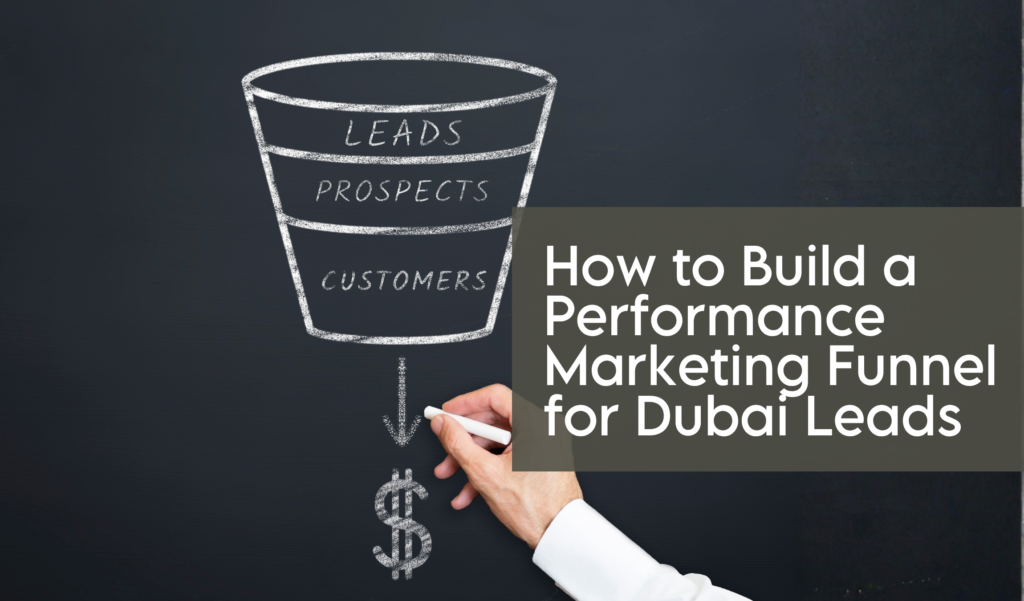
Structurally, traffic alone does not create conversions. A funnel does
A performance marketing funnel connects every stage of the user journey, from first interaction to final decision. Without that structure, paid campaigns operate in isolation, and results remain inconsistent.
First Step: Define the Funnel Stages Clearly
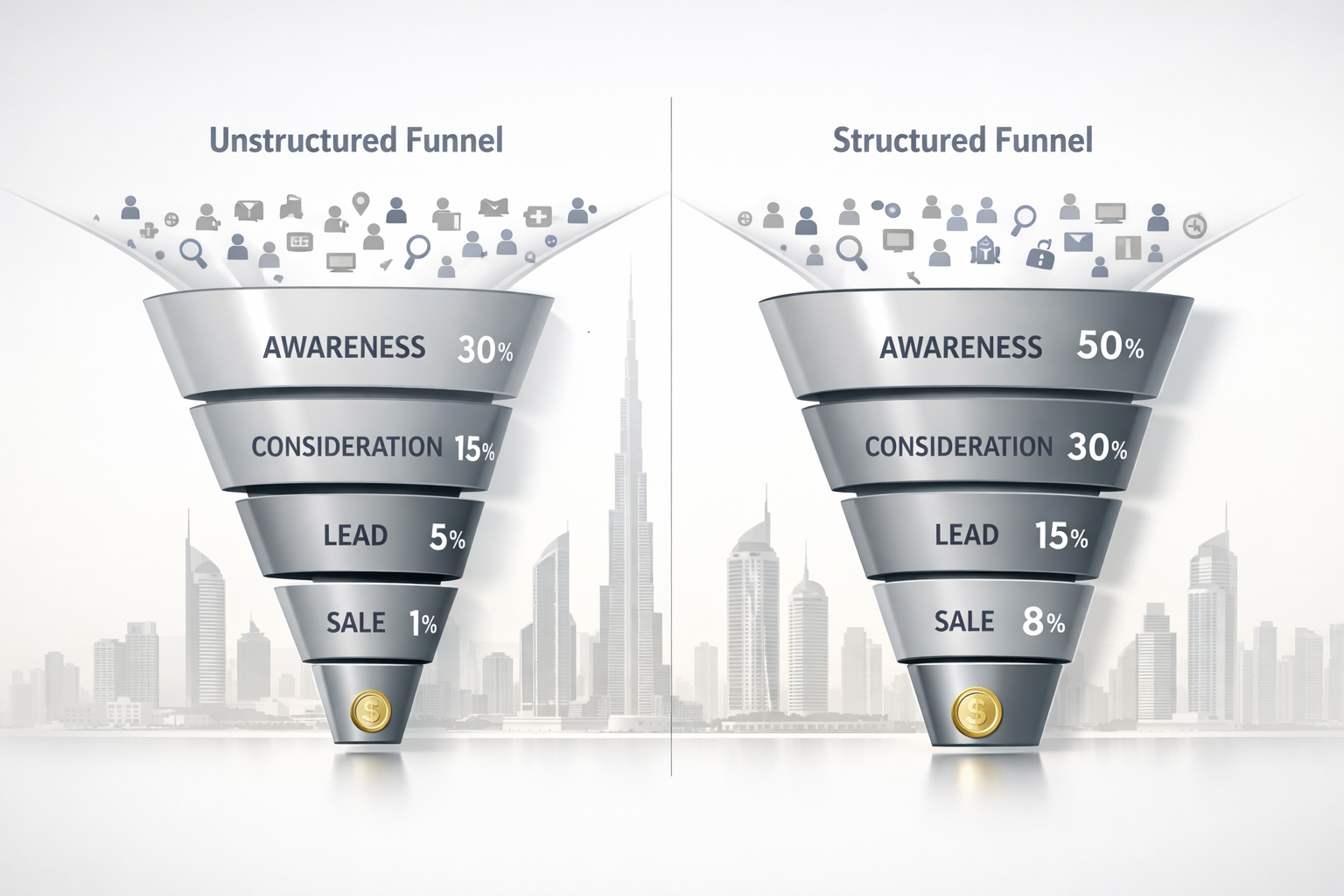
Every performance funnel follows a sequence, whether it is mapped or not.
Awareness brings attention. Consideration builds interest. Conversion turns that interest into action. Retention extends value beyond the initial transaction.
In Dubai, this progression often happens faster than in other markets. Audiences are exposed to multiple offers at once, which shortens attention spans and increases comparison behavior.
Because of that, clarity at each stage becomes essential.
Awareness should focus on visibility and relevance. Consideration should answer questions and reduce uncertainty. Conversion should remove friction and make the next step obvious.
A well-defined funnel ensures that each stage supports the next, instead of competing for attention.
Second Step: Connect the Right Traffic Sources to the Funnel
Not all traffic behaves the same.
Search traffic often carries higher intent. Social traffic is more discovery-driven. Display campaigns create visibility but require follow-up to convert.
Dubai businesses typically rely heavily on paid channels such as Google Ads, Instagram, and LinkedIn. While these platforms generate volume, they also increase competition.
That means traffic quality matters more than traffic quantity.
For example, a Google search campaign targeting “buy apartment Dubai Marina” will bring users closer to a decision than a broad awareness campaign. However, without the right landing experience, even high-intent traffic will drop.
At the same time, social campaigns introduce new audiences into the funnel. These users require more context before taking action.
Strong funnel aligns traffic sources with user intent, ensuring that each visitor enters the journey at the right stage.
Third Step: Build Landing Pages That Convert, Not Just Inform
The landing page determines whether traffic becomes a lead. Dubai businesses still direct paid traffic to generic service pages. These pages often explain what the company does, but they do not guide the visitor toward a clear action.
Conversion-focused landing pages behave differently.
They align with the ad message, and they focus on a single objective, reducing distractions and make the next step easy to understand.
Instead of listing services, they frame a problem and present a solution. Instead of overwhelming users with information, they prioritize clarity.
Is it especially important in high-competition sectors, where users compare multiple options within minutes.
A strong landing page does not try to say everything, but focuses on moving the visitor forward.
Fourth Step: Use Retargeting to Recover Lost Opportunities
Most visitors do not convert on the first interaction.
That does not indicate failure, reflects how decision-making works.
Retargeting allows businesses to reconnect with users who have already shown interest, reinforces the message, adds new context, and brings them back into the funnel.
In Dubai, where audiences are constantly exposed to competing offers, retargeting becomes essential, without it, businesses lose potential leads after the first visit.
Retargeting campaigns can highlight testimonials, case studies, or specific offers. Each interaction builds familiarity and reduces hesitation.
Over time, repeated exposure increases the likelihood of conversion.
Fifth Step: Add Lead Nurturing and Fast Follow-Up
Generating a lead is not the end of the funnel, but the beginning of the sales process.
A lot of businesses lose opportunities because follow-up is delayed or inconsistent. In competitive markets, timing directly impacts conversion.
A structured funnel includes lead nurturing.
Email sequences, WhatsApp communication, and personalized follow-ups maintain engagement after the initial interaction. These touchpoints provide additional information, answer objections, and guide the prospect toward a decision.
Research on marketing-to-sales alignment in the UAE highlights the importance of structured handoff between marketing and sales teams:
https://cmoangels.ae/2026/01/12/how-to-turn-marketing-leads-into-sales-opportunities-a-step-by-step-funnel-guide/
When follow-up is immediate and relevant, conversion rates improve significantly.
Sixth Step: Track Every Step of the Funnel
A performance funnel depends on measurement, without tracking, optimization becomes guesswork.
Modern analytics tools allow businesses to map user behavior across the funnel. Google Analytics, for example, provides funnel exploration reports that show how users move between steps and where drop-offs occur:
https://support.google.com/analytics/answer/9327974?hl=en
Visibility helps identify bottlenecks.
If users click an ad but do not submit a form, the issue may lie in the landing page. If leads do not convert into sales, the problem may exist in follow-up or qualification.
Tracking should include key events such as button clicks, form starts, and submissions. These interactions reveal how users engage with the funnel.
Advanced funnel tracking approaches further refine this process by focusing on real conversion behavior rather than surface metrics:
https://www.antonkoekemoer.com/2025/07/google-analytics-advanced-funnels-to-track-real-conversions/
Additionally, integrating Google Analytics events with Google Ads conversions allows for more accurate performance measurement and campaign optimization:
https://support.google.com/analytics/answer/10632359?hl=en
Seventh Step: Optimize Based on Data, Not Assumptions
A funnel is never finished.
Performance improves through continuous adjustment.
Small changes in headlines, offers, or follow-up timing can significantly impact results. Testing different variations allows businesses to identify what works best for their audience.
In Dubai, where competition is high, optimization becomes a competitive advantage.
Businesses that rely on assumptions often waste budget. Those that rely on data refine their funnel over time.
As a result, acquisition costs decrease while conversion rates increase.
Final Perspective: Funnels Turn Traffic Into Revenue
Driving traffic is only one part of the equation, without a structured funnel, clicks remain disconnected from revenue.
Performance marketing funnel creates that connection, it guides users through each stage, supports decision-making, and converts interest into action.
In Dubai, where competition is intense and attention is limited, this structure is not optional, but what turns marketing from activity into performance.
How MG Lumeo Builds Performance Funnels That Actually Convert
Most businesses understand the idea of a funnel.
The challenge lies in execution.
Funnels often break because each part is treated separately. Ads are managed in one place. Landing pages are built without alignment. Follow-up happens inconsistently. Tracking is either incomplete or not used effectively.
As a result, performance becomes difficult to predict.
At MG Lumeo, the approach focuses on structure rather than isolated tactics.
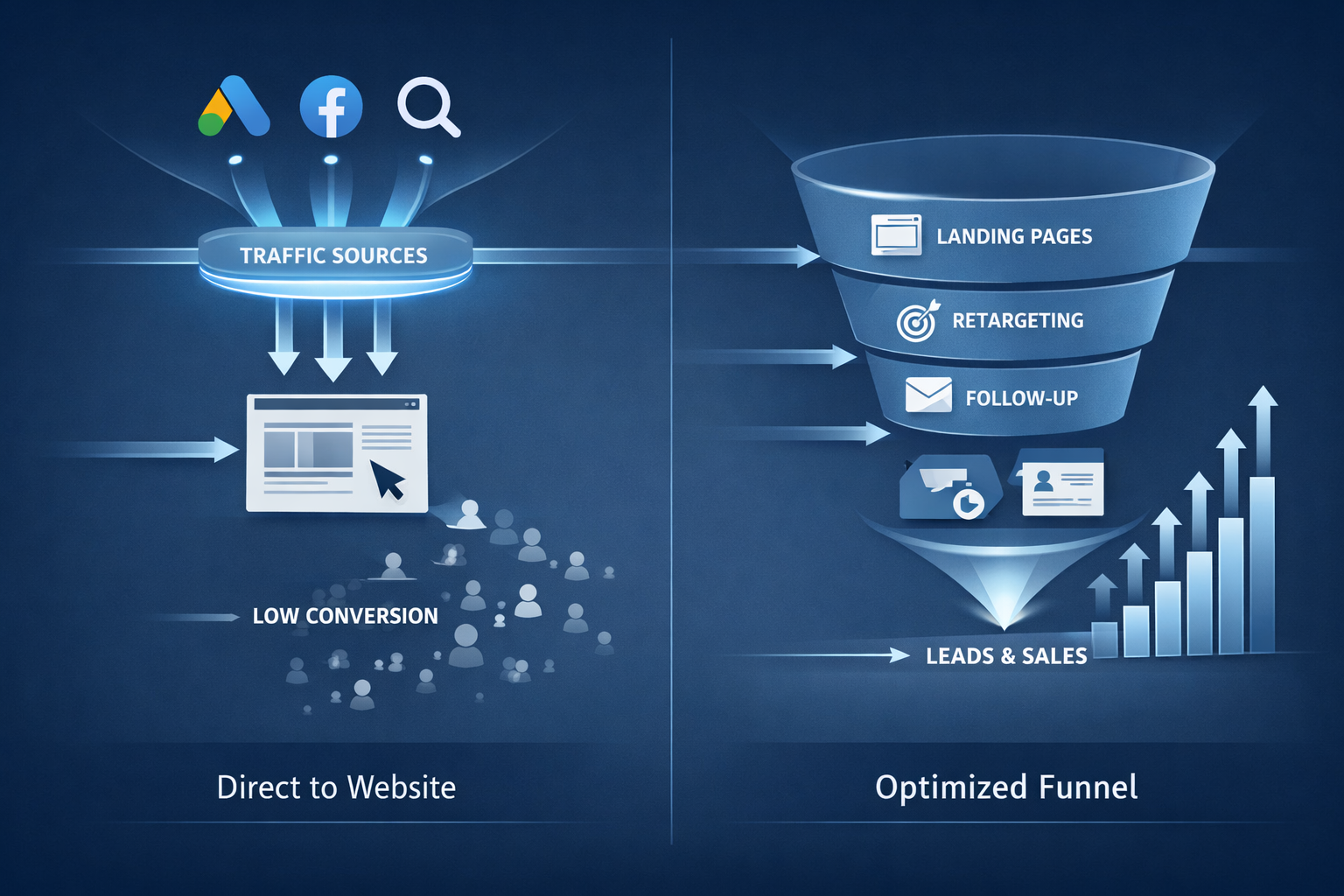
Every funnel is designed as a connected system where each stage supports the next. Traffic sources are aligned with intent. Landing pages are built around specific conversion goals. Retargeting is integrated from the beginning, not added later. Lead nurturing is planned alongside acquisition, not after it, creates continuity across the entire journey.
Instead of relying on individual campaigns to perform, the system itself drives results.
Another key element is visibility into performance.
Tracking is not limited to final conversions. Each interaction is measured, from the first click to the final decision, and this allows for precise identification of drop-off points and opportunities for improvement.
Because of that, optimization becomes structured.
Decisions are based on data rather than assumptions. Adjustments are made at the right stage of the funnel, whether that involves refining traffic targeting, improving landing page clarity, or strengthening follow-up sequences.
In markets like Dubai, where competition is high and user expectations are elevated, this level of structure makes a measurable difference.
Reduces wasted spend, improves conversion rates, and creates more predictable growth patterns.
Over time, the funnel evolves.
High-performing elements are scaled. Underperforming areas are refined or replaced. The system becomes more efficient with each iteration.
That is where performance marketing shifts from short-term campaigns to long-term growth.


Social Profiles