The AI-Visibility Tools We Tested, and What Each One Can Actually Measure
On this page
- The short answer
- What 'AI visibility' measures, and why tools disagree on the number
- How we tested the tools
- What each tool measured, side by side
- DataForSEO's AI Optimization API: the mention data stops at the US border
- What it says it measures
- What we saw
- Otterly.AI: [FACT-GAP 2: the one-line finding from the test log]
- What it says it measures
- What we saw
- Profound: [FACT-GAP 2: the one-line finding from the test log]
- What it says it measures
- What we saw
- Semrush AI Visibility Toolkit-[FACT-GAP 2: the one-line finding from the test log]
- What it says it measures
- What we saw
- Peec AI: [FACT-GAP 2- the one-line finding from the test log]
- What it says it measures
- What we saw
- How accurate AI-visibility tools are, and why two runs disagree
- Repeat runs
- App versus API
- Country
- The free reports that show what trackers cannot
- Which tool fits which need
- FAQ
- Which AI search optimization tool provides the best data accuracy?
- Can I check ChatGPT, Perplexity or the Google app by hand?
- Are free AI visibility checkers and grader tools worth using?
- How we measure AI visibility for ourselves
Every AI-visibility tool promises to show how often ChatGPT, Perplexity AI and Google AI Overviews name your brand in AI search, but each one counts something different, and some cannot see the United Arab Emirates for some engines. At MG Lumeo, we ran [FACT-GAP 2: number] of these tools on our own domain with one set of questions, set to the United Arab Emirates where each tool allowed it, from [FACT-GAP 2: start date] to [FACT-GAP 2: end date]. Here is what each one could measure, and what it only claimed to. We publish the method so you can repeat it.
If every vendor and agency you speak to says its tool measures AI visibility, this page is for telling them apart. You get a pick by need rather than a ranked list, and the short answer comes first, before the detail.
The short answer
No AI-visibility tool gives you one number you can trust on its own, because each tool defines visibility its own way, sees only the engines and countries it supports, and the same question gets a different answer most times it is asked. What the tools can measure well is how often you appear across many questions and many runs, over weeks.
In a study by SparkToro and Gumshoe, reported on 30 January 2026, the same brand list came back less than 1% of the time when one question was asked again and again in ChatGPT and Google's AI answers.
DataForSEO's AI Optimization API: useful for seeing which sites ChatGPT pulls answers from; its ChatGPT mention data covers the United States only.
Otterly.AI: [FACT-GAP 2: what it measured well and what it could not see]
Profound: [FACT-GAP 2: what it measured well and what it could not see]
Semrush AI Visibility Toolkit: [FACT-GAP 2: what it measured well and what it could not see]
Peec AI: [FACT-GAP 2: what it measured well and what it could not see]
Google now reports AI-feature impressions in Google Search for free, Microsoft reports Copilot citations, and Google Analytics shows visits from chatbots.
There is no single best tool here. Pick by the question you need answered; the table in 'Which tool fits which need' does that. To see why the numbers differ in the first place, start with what 'AI visibility' means in each tool.
What 'AI visibility' measures, and why tools disagree on the number
AI visibility is how often AI answers name or cite your brand when people ask the questions you care about, across Google AI Overviews, Google's AI Mode in Google Search, ChatGPT, Perplexity AI and Google Gemini. A mention is your brand named in the answer; a citation is a link to your page shown as a source. Measuring it is part of Generative Engine Optimization (GEO), the AI-answer side of search engine optimization (SEO).
The catch: tools do not agree on the formula. Each row below is the vendor's own documented definition, checked on 22 October 2026.
Tool | What its 'visibility' number divides by |
|---|---|
Peec AI | Responses that mention your brand, divided by all responses, times 100 |
Profound | Responses that mention your brand, divided by responses that mention at least one brand |
Semrush AI Visibility Toolkit | How often your brand is mentioned, compared with the median for your top competitors, which Semrush picks automatically |
The same brand can score differently in each tool on the same day, because the formulas differ; one tool's data does not have to be wrong for that to happen. Compare a tool only with itself, over time.
Share of voice is a separate number. Profound defines it as how often your brand is mentioned compared with all brands. That is why we set up one test, with the same questions in every tool, so the tools could be compared fairly.
How we tested the tools
We tested [FACT-GAP 2: number] tools on MG Lumeo's own domain, with one fixed set of questions, the same in every tool, set to the United Arab Emirates wherever the tool allowed it.
What we fixed | Our setting |
|---|---|
Subject | MG Lumeo's own domain, mglumeodigital.com |
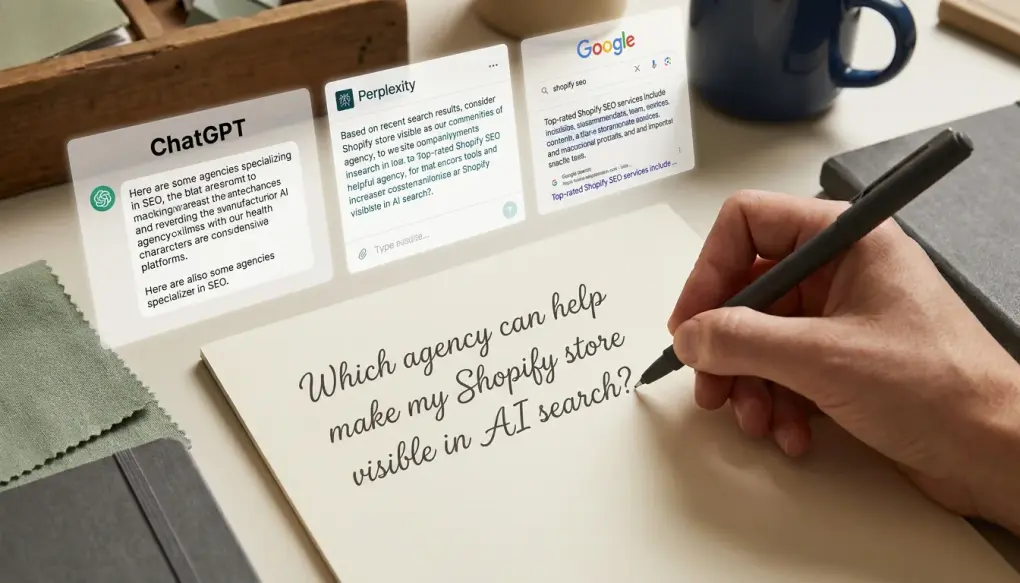
Questions | [FACT-GAP 2: number] prompts, including six real Dubai buyer questions such as "Which agency can help make my Shopify store visible in AI search?" |
Country | United Arab Emirates, where the tool offers it (noted per tool below) |
Engines | ChatGPT, Perplexity AI, Google AI Overviews, Google AI Mode and Google Gemini, where the tool covers them |
Dates | [FACT-GAP 2: start date] to [FACT-GAP 2: end date] |
Runs | [FACT-GAP 2: runs per prompt per day, or days run] |
What we logged | Engines returned, whether the country setting was honoured, the visibility formula, page or site citations, app or API (as the vendor states it), and raw export |
The test ran for weeks for a reason. Researchers at the University of St. Gallen found a single run of a prompt "essentially uninformative" and recommend at least seven runs per prompt per day for brand monitoring, or two to four weeks of data (preprint, April 2026, measured on Swiss servers).
Our first tool run came before the others: DataForSEO's AI Optimization API on 2 August 2026, with 20 calls. We did not compare prices or plans; they change often and are not what this test measured. Here is what each tool measured, side by side.
What each tool measured, side by side
The table below puts what each vendor documents about its AI search tool next to what we saw in our test, so you can see where a claim and a result differ. The UAE column shows which tools can be set to the United Arab Emirates at all.
Tool | Engines the vendor names | UAE setting (per the vendor) | App or API (per the vendor) | What we saw |
|---|---|---|---|---|
DataForSEO AI Optimization API | Google AI Overview, ChatGPT | ChatGPT mention data: United States only | Not stated for the mentions database | ChatGPT mention data came back for the United States; a location setting was rejected |
ChatGPT, Google AI Overviews, Google AI Mode, Perplexity, Gemini, Claude, Microsoft Copilot | UAE available for AI Overviews, ChatGPT and Perplexity (added 30 May 2025) | Not stated; runs as "a neutral, non-personalized user" | [FACT-GAP 2: what we saw] | |
Profound | ChatGPT, Perplexity, Gemini named as examples | Not stated for Answer Engine Insights; Prompt Volumes covers ten regions, UAE not among them | Not stated | [FACT-GAP 2: what we saw] |
Semrush AI Visibility Toolkit | Google AI Mode, ChatGPT named | UAE listed (42 countries for Visibility Overview) | Not stated | [FACT-GAP 2: what we saw] |
Peec AI | ChatGPT, Gemini, Copilot named as examples | Not stated in the docs we read | Web interface, logged-out | [FACT-GAP 2: what we saw] |
Every vendor cell was checked against the vendor's own help pages on 22 October 2026. The first tool below is the one with a dated record from our own run.
DataForSEO's AI Optimization API: the mention data stops at the US border
DataForSEO's AI Optimization API counts how often ChatGPT and Google AI Overviews mention a brand, with an AI search volume estimate, but its ChatGPT mention data covers the United States in English only, so it cannot show the ChatGPT answers a buyer in the United Arab Emirates sees.
What it says it measures
DataForSEO describes mentions and AI search volume for a brand or domain on two platforms: Google's AI Overview and ChatGPT. Its documentation says ChatGPT data "is available for United States only" and "for English only". It is a data service for developers, not a dashboard.
What we saw
On 2 August 2026 we ran 20 calls for our own domain. ChatGPT (model gpt-5.4-2026-03-05) mentioned MG Lumeo zero times, and the domain returned no mention data at all. The endpoint would not take a location setting and returned the United States, so that zero describes ChatGPT's answers for US English users, not buyers in the United Arab Emirates. Separately, we asked ChatGPT six Dubai buyer questions through the same service, with the city in each question, and none of the six answers named MG Lumeo.
The useful part: the same run showed which sites ChatGPT pulled its answers from, led by reddit.com, then TechRadar, Wikipedia, Business Insider and seo.com. It also showed that the brands ChatGPT names and the sites that rank on Google were mostly different lists. That US-only limit is why the next tool matters: it is built to set the country for each question.
Otterly.AI: [FACT-GAP 2: the one-line finding from the test log]
Otterly.AI checks a fixed list of your prompts every day across seven AI search engines, and [FACT-GAP 2: the main thing we saw, for example whether the UAE setting changed the answers]. It lets you set the United Arab Emirates for ChatGPT, Perplexity AI and Google AI Overviews.
What it says it measures
Otterly's help pages list ChatGPT, Google AI Overviews, Google AI Mode, Perplexity AI, Google Gemini, Claude and Microsoft Copilot. The tool records whether your brand was mentioned and your site cited, and how you compare with competitors. Prompts run daily at no fixed hour, there are no manual runs, and you cannot change how often they run. Otterly says it asks "as a neutral, non-personalized user so results aren't skewed by browsing history or preferences".
Each prompt can be set to a country. The United Arab Emirates was added on 30 May 2025, for Google AI Overviews, ChatGPT and Perplexity. Its own help page says AI answers are not deterministic. Its docs do not say whether it reads the app interface or an API.
What we saw
[FACT-GAP 2: engines returned; whether the UAE setting was honoured and changed the answers; the visibility formula as shown; page or site citations; export; one limit; one useful result]
The next tool goes a step further and also estimates what people ask.
Profound: [FACT-GAP 2: the one-line finding from the test log]
Profound tracks how answer engines such as ChatGPT, Perplexity AI and Google Gemini describe your brand, every day, and [FACT-GAP 2: the main thing we saw].
What it says it measures
In Answer Engine Insights, Profound reports a Visibility score, Share of Voice, Citations, Sentiment, FactCheck and Average Position. Its Visibility score counts only responses that mention at least one brand.
Its Prompt Volumes data, an estimate of what people ask in AI search, comes from licensed double opt-in consumer panels, adjusted with modelling. Prompt Volumes lists ten regions: the United States, Canada, the UK, Australia, Germany, Italy, France, Spain, Brazil and South Korea. The United Arab Emirates is not one of them, and US data starts in January 2025. Profound says coverage is strongest in the US, the UK and select European markets. The tool's docs do not say whether answers are read from the app interface or an API, or how to set a country for tracking.
What we saw
[FACT-GAP 2: engines returned; whether a country could be set; the visibility formula as shown; page or site citations; export; one limit; one useful result]
The next tool sits inside an SEO suite many stores already pay for.
Semrush AI Visibility Toolkit-[FACT-GAP 2: the one-line finding from the test log]
The Semrush AI Visibility Toolkit scores how often AI answers mention your brand against the median for your top competitors, and [FACT-GAP 2: the main thing we saw].
What it says it measures
Semrush lists reports for Visibility Overview, Competitor Research, Prompt Research, Brand Performance, Prompt Tracking and an AI Search Site Audit, inside its SEO suite. The platforms it names are Google AI Mode and ChatGPT. Competitors are picked automatically, so the score moves when they do.
The United Arab Emirates is one of 42 countries for Visibility Overview, Competitor Research and Prompt Research. Prompt Tracking refreshes daily. Brand Performance refreshes weekly and is tied to the location and language you choose at setup. The tool's docs do not say whether answers come from the app interface or an API.
What we saw
[FACT-GAP 2: engines returned; whether the UAE setting was honoured; the visibility formula as shown; page or site citations; export; one limit; one useful result]
The next tool reads the same screen a logged-out shopper sees.
Peec AI: [FACT-GAP 2- the one-line finding from the test log]
Peec AI asks your prompts every day through the same web app a logged-out user sees, not through an API, and [FACT-GAP 2: the main thing we saw].
What it says it measures
Peec AI reports Visibility (responses that mention you, divided by all responses, times 100), Position, Sentiment and Sources. The platforms it names as examples are ChatGPT, Google Gemini and Microsoft Copilot. Peec says it collects this data through the web interfaces, not official APIs, and that the platform itself decides which model answers and whether it searches the web.
Peec says API answers "often differ from what users see in the actual interface". The tool's docs we read do not state a country setting for the United Arab Emirates or anywhere else.
What we saw
[FACT-GAP 2: engines returned; whether a UAE setting exists in the product; the visibility formula as shown; page or site citations; export; one limit; one useful result]
Even so, any of these tools can give you a different number tomorrow, and the next section explains why.
How accurate AI-visibility tools are, and why two runs disagree
AI-visibility tools cannot give you a fixed rank, because the same question gets a different answer most times it is asked; what they can measure is how often you appear across many questions and runs. So judge a tool on how many runs it makes, whether it reads the real app, and which countries it can see.
Accuracy, for these tools, comes down to those three things.
Repeat runs
SparkToro and Gumshoe ran 12 brand-recommendation prompts 60 to 100 times each in ChatGPT, Claude and Google AI Overviews, 2,961 runs in all. The same list came back less than 1% of the time, and the same list in the same order less than 0.1% of the time. The researchers call rank positions close to meaningless and say that how often a brand appears is the better measure, though imperfect (reported 30 January 2026; the two companies ran the study themselves).
The University of St. Gallen preprint found that about 65% of cited sources change from one day to the next, and ChatGPT's sources were the least stable of four engines in same-day repeats (measured on Swiss servers).
App versus API
A preprint from the National University of Singapore and Xi'an Jiaotong University watched the ChatGPT app and found that Google results plus OpenAI's API recovered only 26.2% of the pages ChatGPT cited (GPT-5.5 Instant), though about half of the sites. It has not been peer reviewed and did not test any commercial tool (reported 18 October 2026). Peec AI says it reads the web interface for this reason; the other vendors' docs we read do not say how they collect answers.
Country
Some data stops at the US border. DataForSEO's ChatGPT mention data is US-only. Otterly.AI lists the United Arab Emirates for three engines. Profound's prompt-demand regions do not include the United Arab Emirates.
Five questions to ask any AI-visibility tool before you trust its number
How many times is each prompt run, and over how many days?
Does it read the app the shopper uses, or an API?
Can it set the UAE for each engine, and does it show you that it did?
What exactly does its visibility number divide by?
Can you export the raw answers to check them yourself?
Some of these answers you can also get from the engines themselves, through their own reports.
The free reports that show what trackers cannot
Google and Microsoft now report part of your AI visibility from their own data, for free: impressions or citations that no outside tracker can see, though none of them shows ChatGPT mentions. Google Search Console counts AI-feature impressions in Google Search, Bing Webmaster Tools counts citations in Microsoft Copilot, and Google Analytics 4 counts visits from chatbots.
Report | What it counts | What it does not show |
|---|---|---|
Google Search Console, Search Generative AI performance reports (announced 3 June 2026) | Impressions and pages for AI features in Google Search, which include AI Overviews and AI Mode, plus Discover; by country, device and date | No clicks or queries described; rolling out to a subset of sites, with no date for the rest |
Bing Webmaster Tools, AI Performance (public preview, February 2026) | Citations, cited pages and sample "grounding queries" in Microsoft Copilot, Bing's AI summaries and some partners | No clicks or traffic; not a ranking |
Google Analytics 4, AI Assistant channel (added 13 May 2026) | Visits from chatbots such as ChatGPT, Gemini and Claude | Assistants missing from Google's list stay in Referral; app visits with no referrer land in Direct; AI Overviews and AI Mode clicks count as Organic Search |
Google Merchant Center, Insights for AI-powered shopping experiences (announced 27 May 2026) | How products are found in AI Mode, Google AI Overviews and the Google Gemini app | First rollout lists the U.S., Canada, Australia, India and New Zealand, not the UAE |
ChatGPT links carried utm_source=chatgpt.com from June 2025. Since about 9 October 2026, after the GPT-6 rollout, practitioners report that this tag and the referrer are missing, so those visits can land in Direct. OpenAI has not confirmed it. Check Direct before you read a drop as lost AI traffic.
For stores, product visibility in Google's AI shopping comes through Google Merchant Center and the Google Shopping Graph, which Google describes as over 60 billion product listings. A brand-mention tracking tool does not report it. With these added, the job is matching each question you have to the right source.
Which tool fits which need
The right tool depends on the question you need answered, so start from the question, not the tool. A tracker that can set the United Arab Emirates covers ChatGPT and Perplexity AI, Google Search Console covers Google's AI features, Bing Webmaster Tools covers Microsoft Copilot, and Google Analytics 4 covers chatbot visits.
If you need to know | Use |
|---|---|
Whether ChatGPT and Perplexity AI name you when the question is set in the United Arab Emirates | A tracker that sets the UAE per prompt and shows you it did |
Whether your pages appear in Google AI Overviews and AI Mode | Google Search Console's generative AI reports, if your site has them |
Whether Microsoft Copilot cites your pages | Bing Webmaster Tools, AI Performance |
How many visits chatbots send you | The AI Assistant channel in Google Analytics 4, plus your Referral and Direct data |
How your products show in Google's AI shopping | Google Merchant Center (its AI shopping report is not yet listed for the UAE) |
Which sites the AI engines pull answers from | A tool that reports source domains, such as DataForSEO's AI Optimization API |
Whether a change you made worked | Any tracker, the same prompt set, many runs, compared over two to four weeks against its own starting point |
We do not name one best tool: the right one is the row that matches your question. That leaves the shorter questions people ask, starting with accuracy.
FAQ
Which AI search optimization tool provides the best data accuracy?
No AI search optimization tool has published evidence that it provides the best data accuracy, and the pages that claim one usually come from the vendor that sells it. The tools that give you the most data you can check are the ones that run each prompt many times, read the app the shopper uses (the ChatGPT app, for example), set your country, and let you export the raw answers. Ask which of those four a tool does before you trust its number. You can also check the engines yourself, by hand.
Can I check ChatGPT, Perplexity or the Google app by hand?
Yes. A hand check in the ChatGPT app, the Perplexity AI app or the Google app shows you one real answer to one question, which is a useful sanity check but one data point, since the same question gets a different answer most times it is asked. Researchers have called a single run "essentially uninformative", and in one study the same brand list came back less than 1% of the time.
To make it fairer, sign out or use a private window, because your own history can shape answers; the trackers we read say they ask as a neutral or logged-out user. Ask the same questions on several days, and write down which brands and sources appear. In the Google app, AI Mode and Google AI Overviews answer inside Google Search. Free checkers promise to do this for you and hand back a score.
Are free AI visibility checkers and grader tools worth using?
A free AI visibility checker or AI search grader tool usually runs your brand through a few AI engines once, which tells you where to start, not whether anything changed. The free checkers on Google's first page offer one-off results from engines such as ChatGPT and Google AI Overviews.
Use one to build your first list of questions and competitors. Do not compare its score with the score from paid tools, because each tool divides by something different. To see change, you need the same questions run many times over weeks, which is the method MG Lumeo uses to measure its own visibility.
How we measure AI visibility for ourselves
MG Lumeo measures its own visibility in AI search with the same method this guide describes: a fixed set of questions run through ChatGPT and Perplexity AI, checked against Google AI Overviews, recording mentions, share of voice and the sites the answers draw on.
Our starting point, on 2 August 2026, was zero mentions across 20 ChatGPT calls and no mention in six Dubai buyer questions. The 20-call figure is the US ChatGPT picture, not a UAE one, because the tool we used, DataForSEO's AI Optimization API, returns ChatGPT mention data for the United States only
Send us an enquiry