
In 2025, digital marketing stopped being about visibility alone. It became about relevance in the exact moment and place where intent exists.
Brands that embraced geo-driven strategies saw faster results, stronger conversion rates, and clearer ROI. Brands that didn’t kept spending more to reach people who were never going to convert.
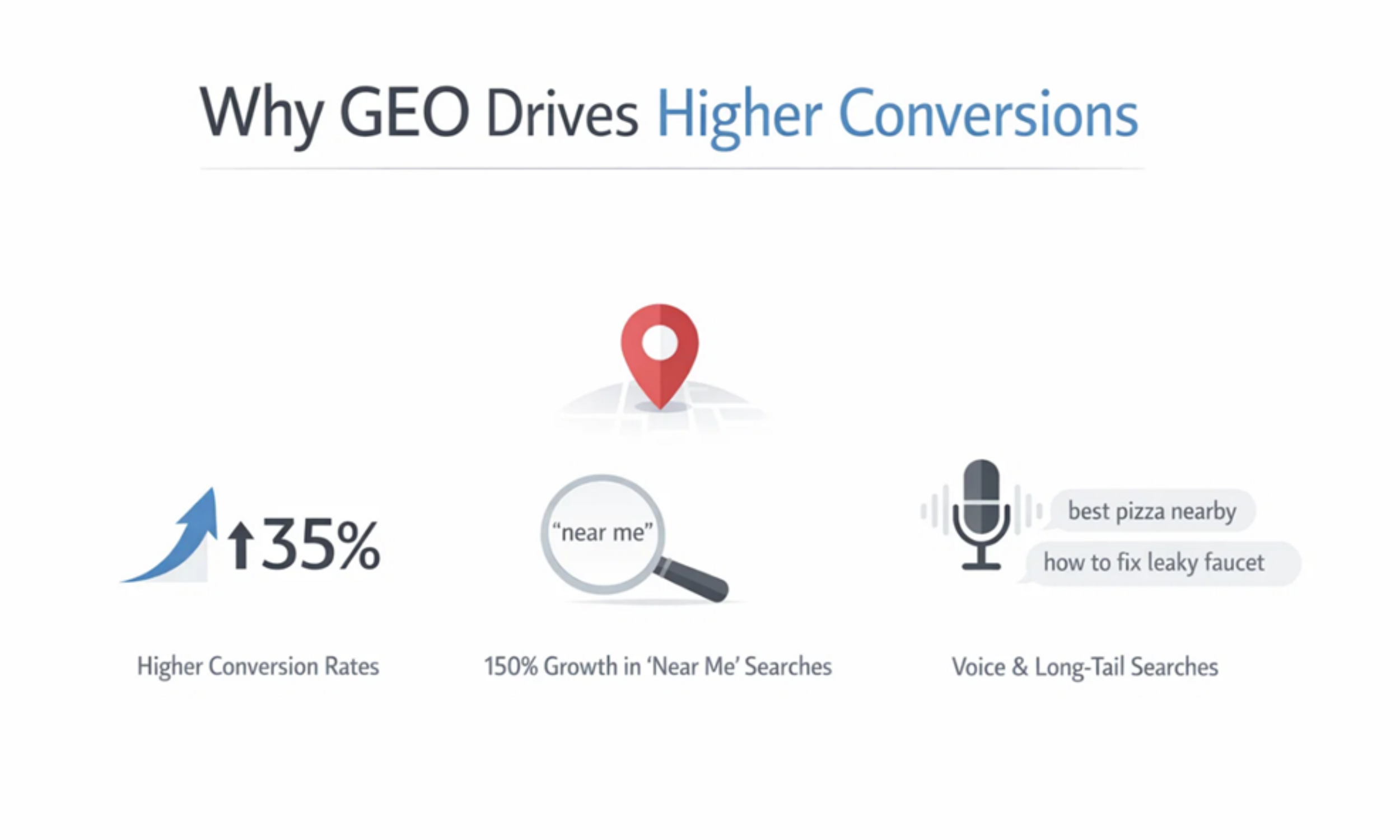
According to recent keyword and conversion data, geo-based tactics delivered up to 36% higher conversion rates, driven largely by the explosive growth of “near me” searches and location-aware discovery across search and social platforms (Ranktracker).
This wasn’t a niche shift. It was structural.
What Is GEO in Digital Marketing?
Let’s start with the base; In digital marketing, GEO refers to using location as a core signal to decide who sees your content, when they see it, and how it’s presented. It combines geo-targeting (reaching users based on real or contextual location) with Generative Engine Optimization (GEO), which optimizes content for AI-powered search engines that surface answers based on intent, proximity, and relevance.
In simple terms, GEO helps brands show up in the right place, at the right moment, with the right message, whether that’s in search results, social feeds, maps, voice queries, or AI-generated responses.
As search and social platforms become more location-aware, GEO has shifted from a technical tactic to a core growth strategy, especially for businesses that rely on local relevance and real-world conversions.
GEO Is No Longer a Tactic , It’s a Growth Layer
In digital marketing today, GEO sits at the intersection of two forces:
- Geotargeting: reaching users based on real-time or contextual location
- Generative Engine Optimization (GEO): optimizing for AI-powered search engines that surface answers based on intent, proximity, and relevance
Together, they determine who sees your brand, when, and why.
That’s why search interest around GEO has surged in 2025, with businesses and agencies actively looking for practical ways to turn location data into real-world results.
Why GEO Searches Exploded in 2025
Search behavior tells the story clearly.
High-growth queries like “geo targeting advertising guide 2025”, “GEO vs SEO digital marketing”, and “best geo targeting tools marketers” point to one thing: businesses are no longer asking what GEO is , they’re asking how to implement it.
At the same time, “near me” searches have grown by over 900%, while 82% of voice searches are now long-tail and location-specific, meaning users are speaking in full, intent-driven queries instead of browsing generically (Ranktracker).
People don’t search for brands anymore.
They search for solutions where they are.
GEO vs SEO: Why Businesses Need Both
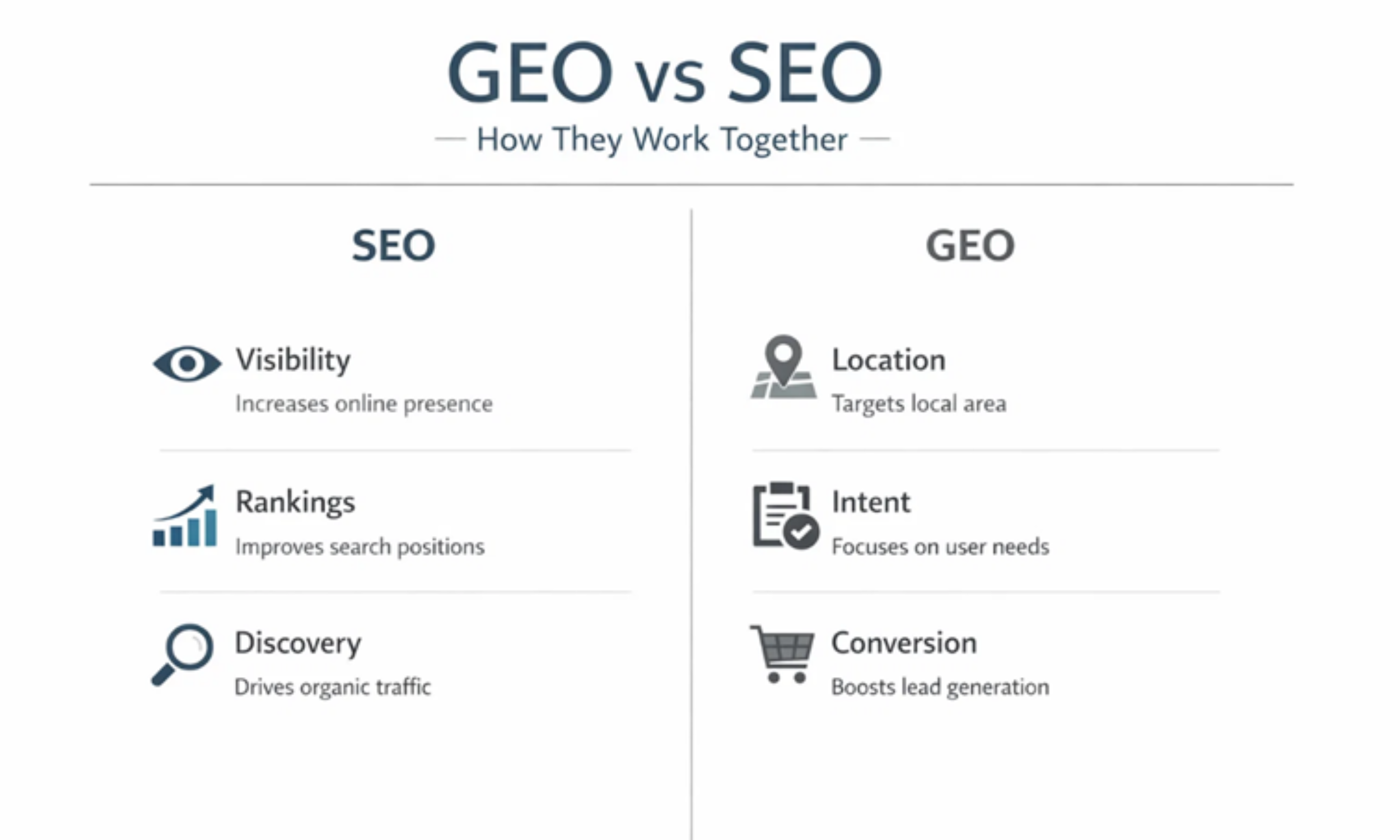
SEO still matters. But SEO alone no longer wins conversions.
SEO builds visibility. GEO builds precision.
As AI-powered search engines continue to evolve, businesses increasingly need SEO and GEO working together to remain visible in generative results, map-based answers, and conversational search interfaces (Futurpruf).
SEO helps you rank.
GEO helps you appear when intent peaks.
This is especially critical for service-based brands, hospitality, retail, real estate, and any business where physical presence, proximity, or regional trust plays a role in decision-making.
How Geo Targeting Advertising Actually Works in 2025
Geo targeting today goes far beyond basic radius targeting.
Modern geo targeting advertising combines real-time location signals, behavioral context, device data, and AI-driven personalization to deliver ads that feel relevant rather than intrusive.
As outlined in recent geo advertising analysis, effective campaigns now adapt messaging based on where users are, what they’re doing, and how they’ve interacted previously , not just where they live (Improvado).
This shift allows brands to:
- Serve different creative by city or neighborhood
- Trigger ads based on movement or proximity
- Align messaging with local context and timing
When done properly, geo targeting doesn’t feel like tracking. It feels like timing.
AI Changed Geo Marketing Completely
AI didn’t just enhance geo marketing , it redefined it.
AI-powered hyper-local advertising now uses real-time location data, predictive behavior modeling, and contextual signals to decide not only who to target, but how to speak to them.
At the same time, privacy-first data practices reshaped execution. Cookie-dependent targeting lost effectiveness, pushing brands toward consent-based, first-party, and contextual geo strategies (Single Grain).
The result is a more intelligent, respectful, and effective approach , one that prioritizes relevance over reach.
What Actually Works in GEO Campaigns
The GEO campaigns that performed best in 2025 shared a few consistent characteristics.
They used location-specific creative, mentioning cities, landmarks, or regional cues to build immediate trust. They matched messaging to context instead of recycling generic copy. They adjusted in real time.
In documented campaigns using custom geo targeting, performance lifts of up to 76% were achieved by aligning creative, timing, and location precisely (Digital Media Solutions).
This wasn’t about volume.
It was about relevance.
GEO Tools Are Enablers, Not the Strategy
GEO success doesn’t come from stacking tools. It comes from using the right ones intentionally.
Most effective strategies rely on a focused ecosystem that may include GeoCRM platforms, location-based ad systems, and analytics tools that connect location data to real outcomes.
An overview of essential geo targeting tools shows how these systems support segmentation, personalization, and measurement , but tools alone don’t create results without strategy (Gotcha Mobi).
Technology enables precision. Strategy creates impact.
Privacy-First GEO Is the New Baseline
Privacy changes reshaped geo marketing in 2025.
Brands that relied on opaque tracking lost trust and effectiveness. Brands that adopted transparent, consent-driven strategies gained long-term resilience.
Modern GEO works within privacy frameworks by using:
- Aggregated location signals
- Contextual relevance
- First-party data
- AI-assisted interpretation
This isn’t a limitation. It’s an upgrade.
How Agencies Should Implement GEO Strategically
Effective GEO implementation follows a clear logic:
- Identify high-intent geographic zones
- Match location with intent and timing
- Align creative with local context
- Measure real-world outcomes, not vanity metrics
This approach turns GEO from a targeting feature into a growth engine.
How MG Lumeo Approaches GEO
At MG Lumeo Digital, GEO is not treated as a standalone tactic or a targeting add-on. It’s designed as part of a wider digital system where location, intent, and visibility work together.
GEO is planned alongside search strategy, paid media, content, and analytics , not after them. The starting point is never “where can we target,” but where real decisions happen. Cities, neighborhoods, and micro-locations are mapped based on intent and commercial value, not surface-level demographics.
Precision matters more than reach. Broad exposure often looks impressive on reports but delivers weak outcomes. MG Lumeo prioritizes relevance , placing brands in front of users at the moment location, intent, and context align. That’s where conversion happens.
Content is built to support this precision. Messaging, creative, and landing experiences are adapted to location naturally, without feeling forced or artificial. The goal is not to remind users where they are, but to make the message feel designed for them.
Performance is measured beyond clicks. GEO strategies are evaluated based on real-world impact, enquiries, foot traffic, qualified leads, and conversion quality. Location data isn’t used just for reporting, but to inform ongoing decisions and refinements.
This approach allows GEO to connect digital presence with physical behavior, whether that’s a visit, a call, or a completed action. It also ensures campaigns remain adaptable as platforms, privacy rules, and user behavior evolve.
For MG Lumeo, GEO is not about being everywhere.
It’s about being present where it actually matters.
A Practical GEO Checklist for Brands and Agencies
This checklist helps brands and agencies quickly assess whether their digital presence is truly location-ready, or just location-aware on the surface.
It’s not about tools. It’s about execution.
1️⃣ Location Intent Is Clearly Defined
You know where your conversions actually happen, not just where your audience lives.
✔ Key cities, regions, or zones are identified
✔ High-intent locations are prioritized over broad reach
✔ Campaigns are mapped to real business outcomes (leads, visits, sales)
2️⃣ Content Is Built for Local Context
Your messaging changes based on where the user is.
✔ Ads and content reference cities, neighborhoods, or landmarks naturally
✔ Local language, tone, or cultural cues are considered
✔ Landing pages reflect the same local relevance as the ad or post
3️⃣ SEO and GEO Work Together
Search visibility and location precision are aligned.
✔ Local search terms and “near me” intent are covered
✔ Location-specific pages or sections exist where relevant
✔ Content is optimized for AI-powered, conversational search
4️⃣ Short-Form and Real-Time Content Are Used Strategically
You show up when and where attention already exists.
✔ Short-form video supports local discovery
✔ Content timing matches local behavior patterns
✔ Engagement is monitored and responded to quickly
5️⃣ Data Is Used Responsibly and Intelligently
Location data informs decisions, without crossing privacy lines.
✔ Consent and transparency are built into data collection
✔ First-party and contextual signals are prioritized
✔ Geo insights guide creative and targeting, not just reporting
6️⃣ Tools Support the Strategy (Not the Other Way Around)
Technology enables execution, not decision-making.
✔ Geo tools are chosen based on business needs
✔ CRM and analytics connect location to outcomes
✔ Performance is measured beyond impressions and clicks
7️⃣ Campaigns Are Continuously Tested and Refined
GEO is treated as a system, not a one-off setup.
✔ Performance is reviewed by location, not just channel
✔ Creative and targeting are adjusted in real time
✔ Insights are documented and reused across campaigns
8️⃣ Results Are Measured in Real-World Impact
Success is tied to outcomes, not activity.
✔ Conversions, visits, or enquiries are tracked by location
✔ Offline impact is considered where relevant
✔ GEO performance informs wider digital strategy decisions
Final Check
If you can confidently check most of these boxes, your GEO strategy is likely working with modern search and social platforms, not against them.
If not, GEO may exist in your stack, but not in your strategy.
A Practical GEO Checklist for Brands and Agencies
The strongest GEO strategies start with clarity.
A simple checklist can help brands assess whether their digital presence is truly location-ready , from creative alignment to data structure and privacy compliance.
This type of checklist doesn’t replace strategy. It reveals gaps.
Final Thoughts
In 2025, GEO stopped being optional.
As search became conversational, platforms became contextual, and users became more intentional, location emerged as one of the strongest signals in digital marketing.
Brands that understood this moved faster, converted better, and spent more efficiently. Brands that didn’t are still chasing reach.
GEO isn’t about being everywhere.
It’s about being exactly where it matters.






Social Profiles