Search did not collapse in 2025.
It split.
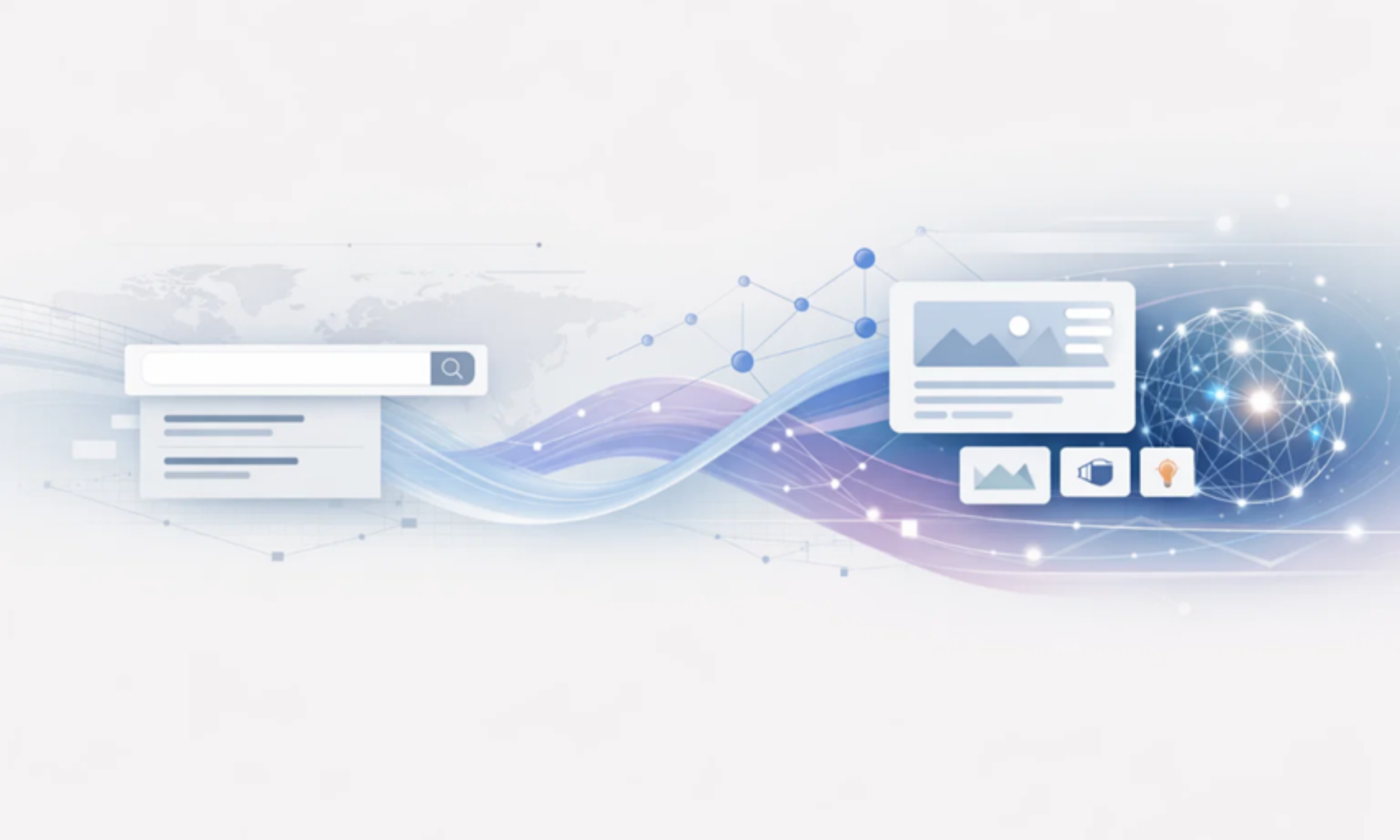
For years, Google was the primary gateway to information, discovery, and demand. Today, that gateway has multiplied. Users are no longer relying on a single engine to answer questions, compare options, or form opinions. They are moving fluidly between Google, ChatGPT, and other large language models, depending on intent and context.
According to recent traffic analysis, around 14.3 percent of Google users are already trying ChatGPT for search queries, particularly informational ones, signalling a clear shift in discovery behavior rather than a sudden replacement of traditional search (Wellows).
For digital agencies, this change does not mean abandoning SEO. It means understanding how search has fragmented and how visibility now needs to be built across multiple engines, not just rankings alone.
Search Did Not Change. Discovery Did.
Google remains dominant in scale. With roughly 136 billion monthly visits, it still owns transactional and high-intent searches where users are ready to act. ChatGPT and other LLMs operate on a much smaller scale, with 1 to 4 billion monthly visits, but their influence is growing fast, particularly in early-stage and exploratory queries (Keyrus).
The difference is not volume.
The difference is behavior.
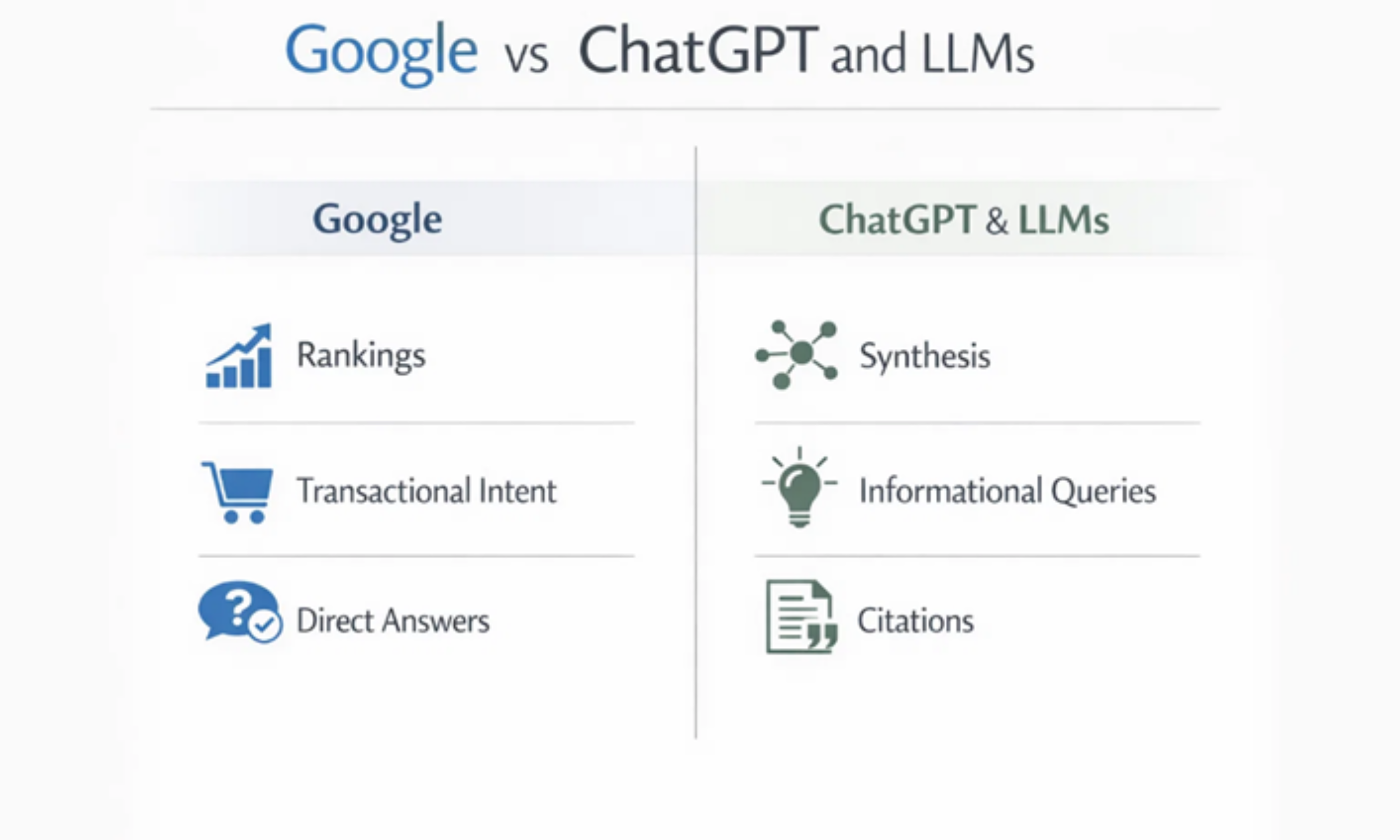
Google answers questions by ranking pages.
LLMs answer questions by synthesizing information.
This distinction matters because it changes what visibility looks like and how authority is earned.
Where SEO Is Losing Traffic and Why
Many agencies noticed something uncomfortable in 2025.
Informational content that once drove consistent organic traffic began to decline.
Industry data shows 17 to 25 percent traffic drops across informational SEO segments in certain verticals, particularly for generic how-to and explainer content (Keyrus).
This does not mean SEO stopped working.
It means intent moved.
Users increasingly turn to LLMs when they want:
- explanations
- comparisons
- summaries
- starting points
Google still dominates when users want:
- prices
- locations
- products
- services
- transactions
SEO lost traffic where content offered answers without differentiation. It held ground where content supported decisions.
What LLMs Actually Reward
Optimizing for ChatGPT or other LLMs is not about keywords in the traditional sense. It is about clarity, authority, and structure.
LLMs do not rank pages. They cite sources.
Content that performs well in AI-generated responses tends to share a few characteristics:
- clear, direct language
- well-defined entities such as brands, locations, and concepts
- structured information that is easy to extract
- consistent authority across related topics
Guides on how ChatGPT and Google differ in surfacing information show that LLMs prioritise context and credibility over density or repetition (GeoBrand).
This is where Generative Engine Optimization, or GEO, comes into play.
GEO vs SEO in 2025: Why Agencies Need Both
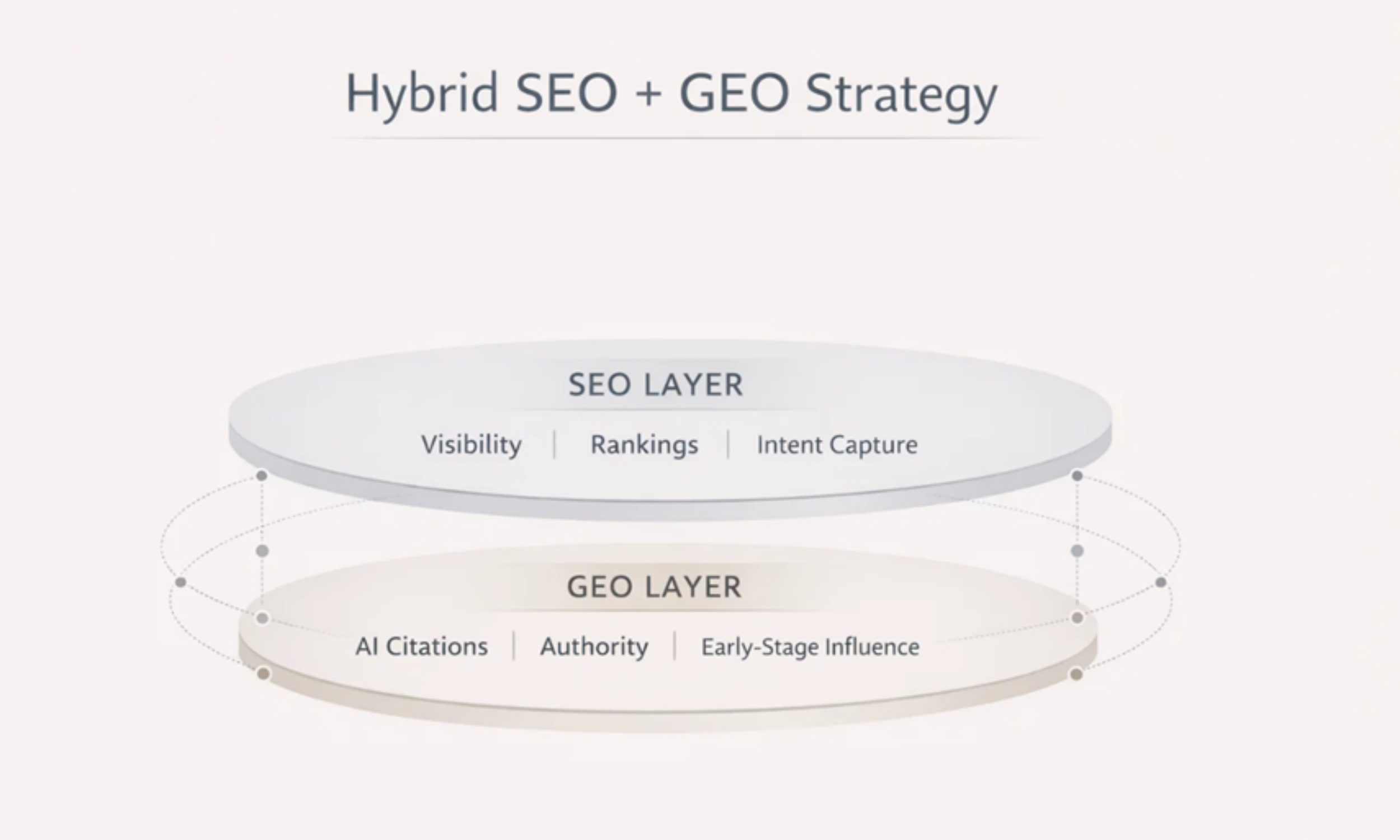
SEO and GEO are not competing disciplines. They solve different problems.
SEO captures demand that already exists.
GEO influences understanding before demand fully forms.
Search behavior analysis shows that informational queries are increasingly handled by LLMs, while transactional queries remain largely with Google, reinforcing the need for a hybrid strategy rather than a replacement mindset (McNeece).
When agencies treat SEO and GEO as separate silos, they limit impact. When they align them, brands benefit from both visibility and influence across the full decision journey.
Data suggests brands using hybrid SEO and LLM optimization strategies see up to 4.4x higher conversion performance, driven by stronger authority signals earlier in the funnel.
What Generative Engine Optimization Looks Like in Practice
GEO is not about chasing AI tools or rewriting content for bots. It is about making information easier for AI systems to trust, understand, and reference.
Effective GEO focuses on:
- entity optimization so brands and topics are clearly defined
- structured data that supports AI interpretation
- authoritative content clusters rather than isolated pages
- consistency across owned channels
Studies on GEO implementation show that brands applying structured data and entity-focused optimization achieved up to 500 percent increases in AI citation visibility, not through rankings but through inclusion in generated answers (AEO Agency Services).
This shift moves the goal from traffic alone to being referenced as a source of truth.
Traffic Diversification Is No Longer Optional
One of the most important lessons for agencies in 2025 is that Google dependency is now a risk, not a strategy.
Analysis shows only 14.3 percent overlap between Google users and those experimenting with ChatGPT, meaning discovery paths are diverging rather than converging (Wellows).
Brands that rely exclusively on organic search rankings are exposed to sudden shifts. Brands that build authority across multiple discovery surfaces are more resilient.
This includes:
- owned content hubs
- email and community channels
- thought leadership content referenced by AI systems
- diversified acquisition beyond search alone
Growth Beyond Google Is Already Happening
Early adopters of hybrid SEO and GEO strategies are not losing traffic. They are redistributing it.
Agencies tracking alternative discovery channels report growth rates approaching 29 percent in visibility and engagement when combining search, AI citations, and owned distribution.
The pattern is consistent.
Visibility no longer means clicks alone.
It means presence wherever decisions are shaped.
What This Means for Agencies
For agencies, this shift challenges traditional reporting models.
Rankings alone no longer tell the full story.
Traffic alone does not reflect influence.
CTR alone does not capture authority.
Agencies that adapt are expanding how they measure success to include:
- AI citation presence
- topical authority
- multi-engine visibility
- conversion quality, not just volume
This does not require abandoning SEO. It requires evolving it.
How MG Lumeo Approaches Search in an LLM World
At MG Lumeo Digital, search is treated as an ecosystem rather than a single channel.
SEO, GEO, content, and authority are planned together, not in isolation. The focus is on building visibility where users search today and where they will search next.
The approach prioritises:
- authority over tactics
- clarity over volume
- resilience over short-term wins
By aligning traditional search optimization with generative engine visibility, MG Lumeo helps brands remain discoverable without chasing every new platform or trend.
Search is not disappearing.
It is expanding.
A Simple LLM Visibility Check for Brands
Brands do not need to overhaul everything to adapt. They need awareness.
Key questions to ask:
- Does our content clearly define who we are and what we do?
- Are our core topics structured for AI understanding?
- Are we visible beyond Google rankings alone?
- Are we building authority or just publishing volume?
Final Thoughts
The shift from Google to ChatGPT is not a battle for dominance. It is a signal that discovery has changed.
Agencies that understand this shift calmly and strategically are not losing relevance. They are gaining leverage.
Search is no longer one engine, one metric, one playbook.
It is a distributed system that rewards clarity, authority, and adaptability.
The agencies that thrive next are not the ones reacting fastest.
They are the ones thinking clearly.



Social Profiles