(And Why Most Brands Missed It)
Social media in 2025 did not reward louder brands, bigger budgets, or more frequent posting.
It rewarded brands that understood one simple shift: social platforms stopped behaving like media channels and started behaving like ecosystems.
That change caught many businesses off guard.
The brands that performed best in 2025 were not chasing trends for visibility. They adapted to how platforms actually worked, how people behaved inside them, and how algorithms interpreted interaction. They treated social media less like advertising space and more like a living system that needed presence, speed, and relevance.
For digital agencies, this was the year strategy finally mattered more than execution volume. Not because content became less important, but because content without context stopped working.
Here is what genuinely moved the needle in 2025.
2025 Was the Year Polished Ads Stopped Carrying the Conversation
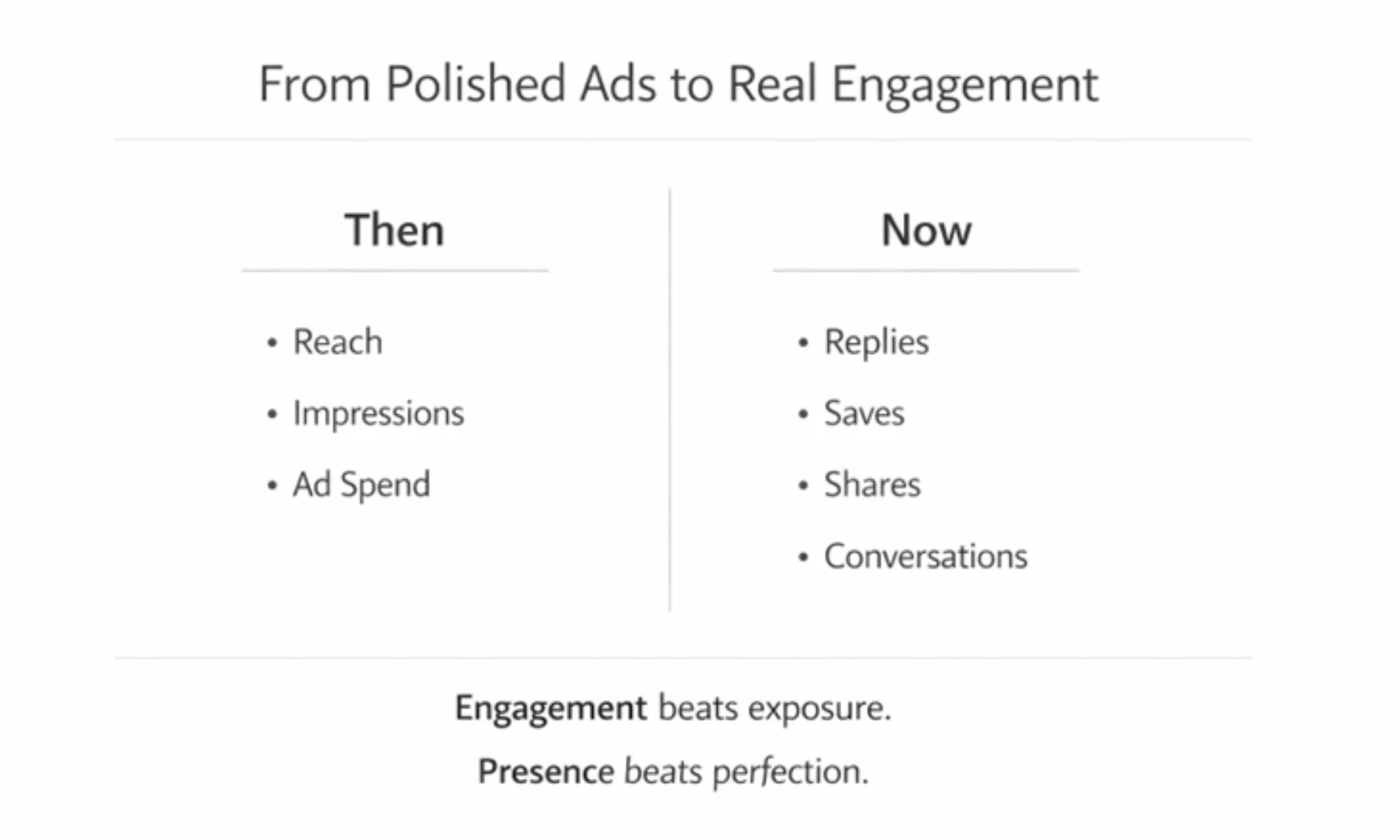
Highly produced, overly branded social content did not disappear in 2025, but it lost its advantage. Platforms deprioritized content that felt interruptive or detached from real user behavior.
The shift was subtle at first, then obvious.
Users stopped engaging with posts that looked like ads. Algorithms followed. Content that felt conversational, reactive, or human consistently outperformed content that felt staged.
This did not mean “low quality.” It meant less manufactured. A short video filmed on a phone, responding to a comment or showing a real moment, often outperformed a perfectly edited campaign asset.
The winning brands stopped trying to impress and started trying to connect.
According to Hootsuite’s Social Trends research, platforms in 2025 increasingly rewarded brands that adapted to real user behavior rather than relying on polished, campaign-style content.
https://www.hootsuite.com/research/social-trends
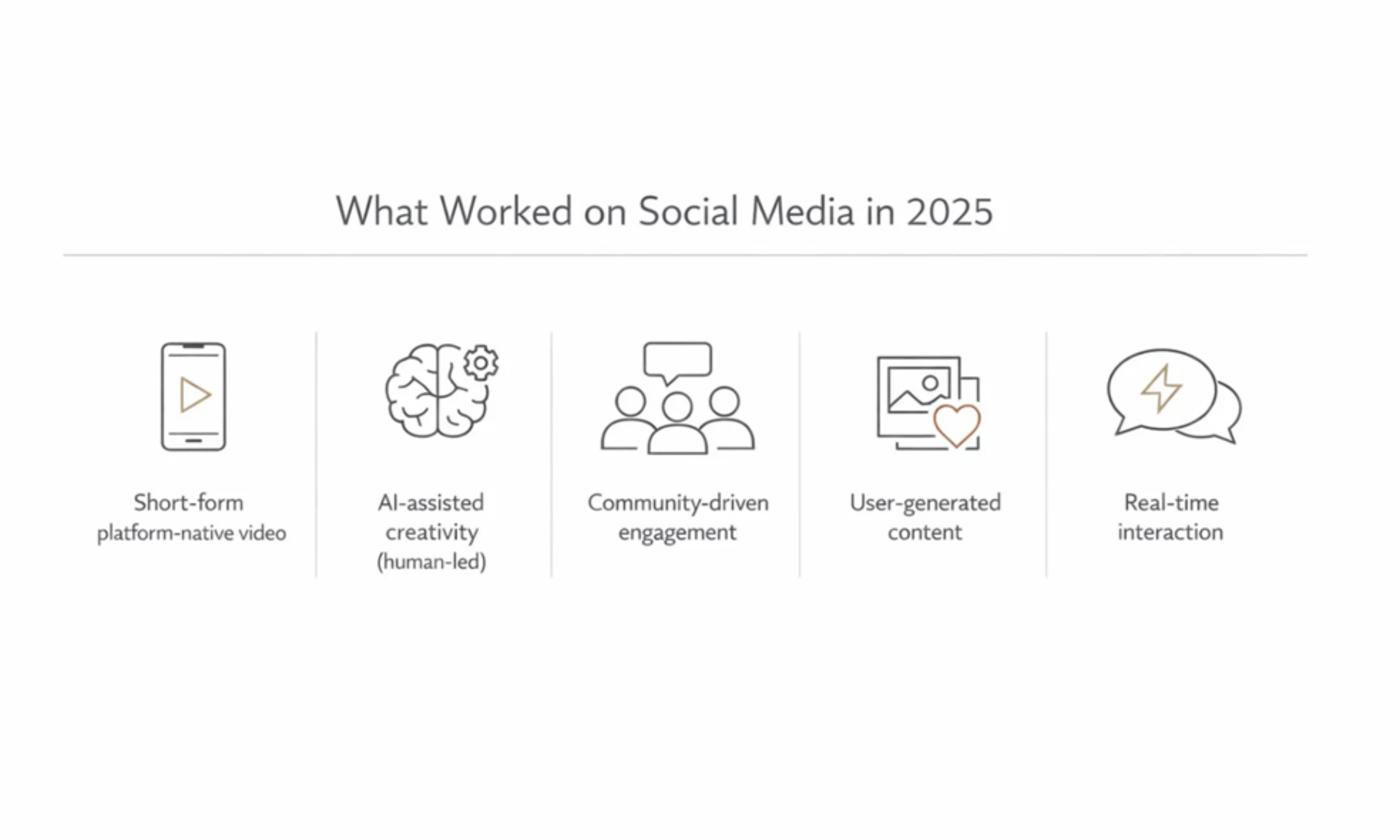
AI Did Not Replace Creativity – It Amplified It
AI was everywhere in 2025, but the brands that benefited most were not the ones using it to generate content at scale. They were the ones using it to move faster, test ideas, and personalize experiences without losing their voice.
AI-powered personalization helped content land with the right audience at the right moment. AI-assisted creative formats, such as memes and remix culture, boosted engagement significantly, but only when guided by human judgment.
The brands that treated AI as a shortcut sounded like everyone else.
The brands that treated AI as a collaborator created content that felt timely, relevant, and culturally aware.
AI did not replace creativity. It removed friction from it.
Short-Form Video Became Infrastructure, Not a Trend
By 2025, short-form video was no longer an “add-on” to a social strategy. It became the foundation.
Algorithms across platforms prioritized video that:
- Hooked attention immediately
- Felt native to the platform
- Delivered value quickly
This was not about entertainment alone. Educational clips, behind-the-scenes moments, commentary, and reactive content all performed well when they respected the format.
The difference was not length. It was intent.
Brands that treated short video as a serious communication channel, not just a format, saw consistent reach and engagement. Brands that treated it as filler did not.
Platform-Native Content Outperformed Cross-Posting Every Time
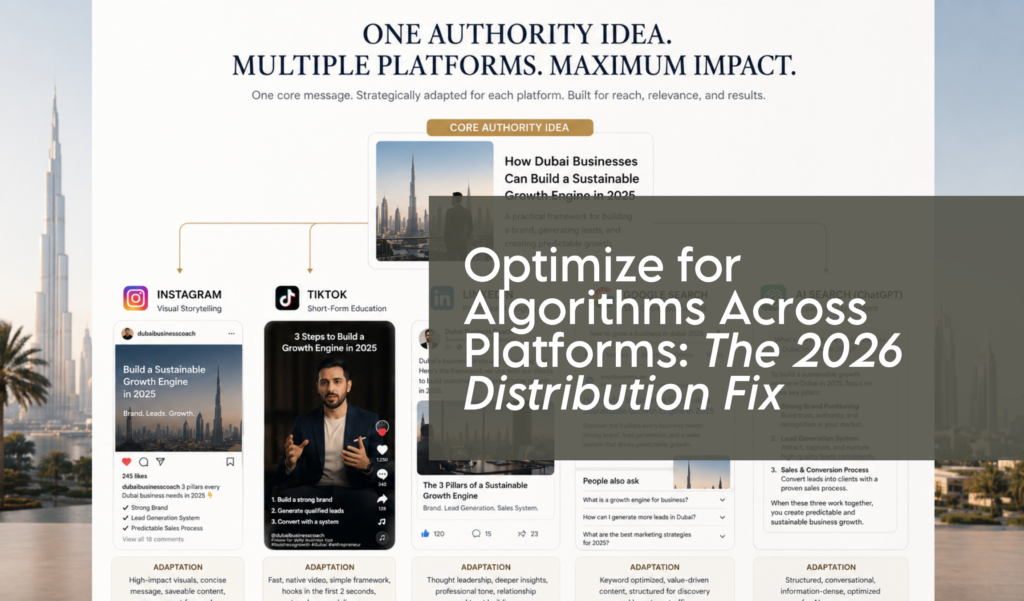
One of the clearest performance patterns in 2025 was this: content designed for a specific platform consistently outperformed content reused everywhere.
TikTok rewarded speed, culture, and relevance.
LinkedIn rewarded clarity, authority, and professional perspective.
Instagram rewarded visual storytelling and familiarity.
As highlighted by Outbrand, platform-native content consistently outperformed cross-posted material in 2025, as each platform rewarded content that matched its unique tone, pacing, and audience expectations.
https://www.outbrand.design/blog/8-powerful-examples-of-social-media-strategy-for-2025
Cross-posting the same content across platforms became a liability. What saved time in execution cost performance in reach and relevance.
The brands that won understood that platforms are not distribution channels. They are environments. Each one has its own language, expectations, and signals.
UGC and Long-Term Creator Partnerships Delivered Real ROI
Influencer marketing in 2025 looked very different from previous years.
According to Adweek’s 2025 social media trends report, brands that invested in long-term influencer partnerships and user-generated content saw up to 60% higher ROI compared to short-term, campaign-based collaborations.
https://www.adweek.org/blog/10-popular-social-media-trends-2025-report
One-off sponsored posts declined in effectiveness. Long-term collaborations performed significantly better. Familiar faces built trust. Repeated exposure built credibility.
User-generated content outperformed traditional brand content because it felt believable. Not because it was perfect, but because it reflected real experiences.
Brands that invested in relationships instead of reach saw higher returns. In many cases, UGC and long-term partnerships delivered up to 60% higher ROI compared to short campaigns.
People did not want endorsements. They wanted proof.
Case Studies That Defined the Shift
Recent case studies highlighted by The Social Media Blog show that brands focusing on real-time interaction, purpose-driven storytelling, and human presence consistently outperformed traditional promotional campaigns in 2025.
Several brands illustrated what working with the platform, not against it, looked like.
Starbucks leaned into Instagram Stories to spotlight local baristas and everyday moments. The content felt personal, not corporate. The result was stronger emotional connection and higher engagement.
Patagonia used YouTube Live to host purpose-driven conversations around activism and sustainability. Instead of pushing products, they reinforced values. Loyalty followed.
Similar patterns appear across multiple digital marketing case studies published by Rebus Advertising, where community engagement and responsiveness proved more effective than static brand messaging.
https://rebusadvertising.com/blogs/case-studies-in-digital-marketing/
Old Spice embraced real-time interaction by responding to user comments with custom videos. The brand became part of the conversation. Sales grew by over 100% as a result.
None of these wins came from louder messaging. They came from relevance, presence, and responsiveness.
Community Became the Real Growth Engine
The strongest engagement spikes in 2025 came from brands that listened, not just posted.
Social listening tools allowed teams to identify moments where conversations were happening in real time. Brands that joined those conversations,through replies, stitches, duets, and comments,saw engagement increases of up to 94%.
The shift was clear. Growth moved away from broadcasting and toward participation.
Communities, not audiences, drove momentum.
AR, In-App Shopping, and the Rise of “No-Exit” Social
Another defining shift in 2025 was how much of the customer journey happened inside platforms.
Augmented reality features increased interaction and memorability. In-app shopping reduced friction. Social platforms stopped being discovery tools and started becoming conversion environments.
Global social commerce approached the trillion-dollar mark, driven largely by platforms like TikTok and Instagram.
Brands that optimized for in-platform experiences reduced dependency on external funnels. Discovery, trust, and purchase increasingly happened in one place.
Algorithm Shifts Changed the Definition of “Good Content”
According to Touchstone Digital, social media algorithms in 2025 placed greater weight on interaction signals such as replies, saves, and meaningful engagement, while deprioritizing passive reach and repetitive content.
https://www.touchstonedigital.com/insights/digital-strategy/how-social-media-algorithms-are-set-to-change-in-2025/
Algorithms in 2025 rewarded signals that indicated genuine interest:
- Replies
- Saves
- Shares
- Time spent
Likes mattered less. Passive reach mattered less. Content that sparked interaction rose.
At the same time, privacy changes pushed brands toward first-party strategies. Owned audiences, email lists, and community spaces became more valuable as targeting tightened.
The algorithmic message was consistent: meaningful interaction mattered more than volume.
What This Meant for Brands and Agencies
2025 separated execution from strategy.
Brands that relied on rigid calendars struggled to keep up. Brands that allowed experimentation, feedback loops, and real-time adaptation thrived.
For agencies, the role shifted. Execution alone was no longer enough. Strategic thinking, platform fluency, and decision-making speed became the real value.
The most effective agencies stopped acting as content factories and started acting as partners embedded in the brand’s growth logic.
How MG Lumeo Approaches Social Media in 2026
Every platform operates as its own environment, with its own signals, behaviors, and expectations. Content only works when it fits naturally into that environment. That’s why strategy always comes before content. Decisions are made based on how platforms function, how audiences behave inside them, and how algorithms interpret interaction — not on trends or templates.
Platform behavior comes before format. A Reel, a post, or a video is never created in isolation. It’s built to match how people discover, consume, and engage on that specific platform. What works on TikTok isn’t forced onto LinkedIn. What performs on LinkedIn isn’t diluted for Instagram. Each channel is approached with intention.
Human presence comes before polish. Audiences respond to content that feels current, responsive, and real. Overproduced visuals are replaced with clarity, relevance, and voice. The goal isn’t perfection, it’s presence. Showing up in conversations, responding in real time, and contributing where attention already exists.
The focus is on platform-native execution, creating content that looks and feels like it belongs. Video-first thinking shapes how stories are told, prioritizing speed, clarity, and emotional connection over production value. Community and engagement are treated as growth drivers, not secondary metrics. Conversations, replies, and shared moments matter more than impressions.
Data-informed experimentation sits at the core of every strategy. Performance is observed, tested, and refined continuously. Content evolves based on real feedback, not assumptions. What works is scaled. What doesn’t is adjusted quickly.
The result is content that feels present, not produced, relevant in the moment, aligned with the platform, and connected to real people.
This approach reflects how social media actually works today, and where it continues to go.
link to MG Lumeo services page)
Closing Thoughts
What worked on social media in 2025 was not mysterious. It was human.
Brands that showed up, listened, adapted, and participated grew. Brands that relied on outdated playbooks did not.
As platforms continue to evolve, the fundamentals remain clear: relevance beats reach, connection beats polish, and presence beats performance theater.
That is not a trend. That is the new baseline.




Social Profiles